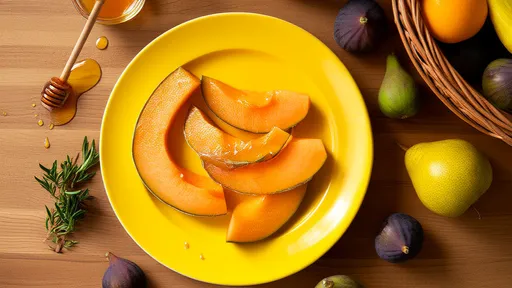
The relationship between color and taste perception has long fascinated scientists, chefs, and marketers alike. Among the spectrum of hues, yellow stands out as a particularly intriguing shade when it comes to influencing how we experience sweetness. Emerging research suggests that serving food on yellow tableware can subtly enhance our perception of sweetness, creating a fascinating intersection between visual cues and gustatory experiences.
This phenomenon stems from the way our brains process multiple sensory inputs simultaneously. When yellow wavelengths enter our visual field, they trigger neural associations that prime our taste receptors. The warm, bright quality of yellow subconsciously evokes memories of ripe fruits, golden honey, and sun-kissed desserts—all naturally sweet substances we encounter throughout our lives. This chromatic priming effect creates an expectation of sweetness before food even reaches our tongue.
Studies in gastrophysics—the scientific study of eating experiences—demonstrate that identical desserts served on yellow plates consistently receive higher sweetness ratings from participants compared to when served on white or blue plates. The effect persists even when researchers inform subjects about the potential influence of color, suggesting this isn't merely a conscious bias but rather a deeply rooted sensory interaction. Food scientists speculate that yellow's medium wavelength (around 570-590 nanometers) may stimulate overlapping neural pathways associated with sweetness detection.
Restaurateurs and food stylists have quietly applied this principle for decades. Pastry chefs often favor golden-hued plates for fruit tarts and custards, while beverage companies frequently use yellow in packaging for lemonades and honey teas. The color doesn't actually alter the food's chemical composition but rather enhances our subjective experience of it. This explains why a scoop of vanilla ice cream might taste more richly sweet when served in a yellow bowl compared to a black one.
The psychology behind this effect traces back to evolutionary biology. Our ancestors relied on visual cues to identify energy-rich foods, with yellow and orange often indicating ripe, sugar-packed fruits. This color-nutrition association became hardwired into human perception over millennia. Modern humans inherit this sensory shortcut, causing our brains to amplify sweet flavors when accompanied by appropriate visual stimuli. The yellow plate essentially tricks our neural circuitry into a heightened state of sweetness receptivity.
Interestingly, the effect shows cultural variations. In societies where yellow isn't traditionally associated with sweet foods—such as regions where saffron colors savory dishes—the enhancement appears less pronounced. This suggests that while some color-taste connections may be universal, others develop through learned associations. Nevertheless, across most Western and many Asian cultures, the yellow-sweetness connection remains remarkably consistent in experimental settings.
Practical applications extend beyond professional kitchens. Home cooks can leverage this knowledge by choosing yellow servingware for dishes where enhanced sweetness might improve the eating experience. A spinach salad with mandarin oranges gains appeal when tossed in a yellow bowl, while whole-grain pancakes might require less maple syrup when served on golden plates. The approach works particularly well for healthy desserts where reduced sugar content might otherwise disappoint expectations.
Critically, the effect has limits. Yellow plating won't make bitter foods taste sweet, nor can it compensate for extremely unbalanced flavor profiles. The enhancement works within a moderate range, subtly boosting existing sweet notes rather than creating sweetness where none exists. This nuance makes the technique valuable for fine-tuning rather than overhauling flavor experiences. Professional tasters note that the effect seems strongest with foods containing subtle or complex sweetness, like certain cheeses or roasted vegetables.
Future research may explore how specific shades of yellow produce varying effects. Early indications suggest brighter, cleaner yellows work best for sweetness enhancement, while muted or greenish yellows prove less effective. The reflectivity of surfaces also matters—glossy yellow plates appear to intensify the effect compared to matte finishes. These subtleties hint at a rich area for further scientific exploration and culinary innovation.
As our understanding of multisensory eating experiences grows, simple interventions like color-optimized tableware offer accessible ways to enhance dining pleasure. The yellow plate phenomenon exemplifies how ancient neural wiring continues to shape modern perception in unexpected ways. Whether in high-end restaurants or family kitchens, harnessing these insights allows for more intentional, satisfying food experiences that delight both the eye and the palate.
By /Jul 17, 2025

By /Jul 17, 2025

By /Jul 17, 2025
By /Jul 17, 2025
By /Jul 17, 2025
By /Jul 17, 2025

By /Jul 17, 2025

By /Jul 17, 2025
By /Jul 17, 2025
By /Jul 17, 2025

By /Jul 17, 2025

By /Jul 17, 2025

By /Jul 17, 2025
By /Jul 17, 2025
By /Jul 17, 2025
By /Jul 17, 2025
By /Jul 17, 2025
By /Jul 17, 2025
