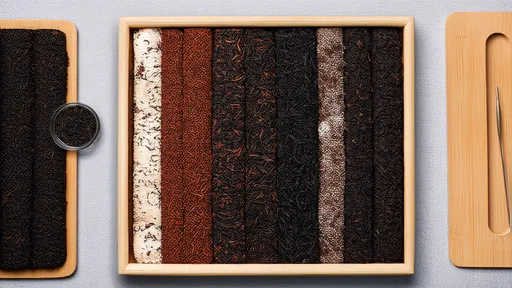
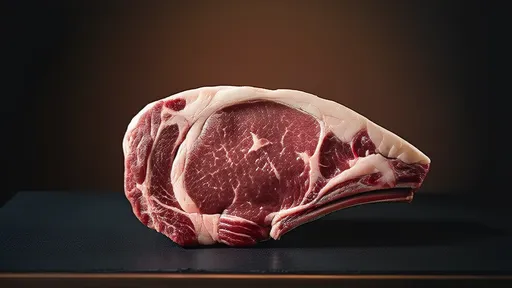
Pu-erh tea, a fermented dark tea originating from China’s Yunnan province, undergoes a unique aging process that significantly alters its flavor, aroma, and appearance. One of the most striking transformations during this maturation is the deepening of its color, often shifting from reddish-brown to near-black hues. This phenomenon is largely attributed to non-enzymatic browning, a complex series of chemical reactions that occur without the involvement of enzymes. Unlike enzymatic browning, which is common in fruits like apples or bananas, non-enzymatic browning in Pu-erh tea is driven by oxidation, polymerization, and the Maillard reaction—a process that also gives roasted coffee and seared steak their rich flavors.
The Role of the Maillard Reaction in Pu-erh’s Transformation
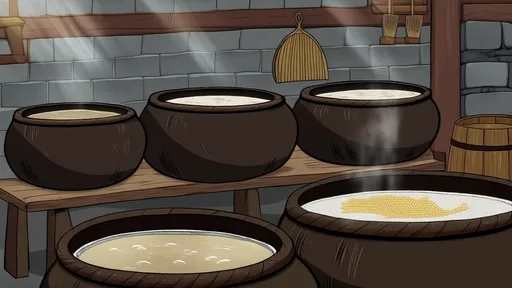
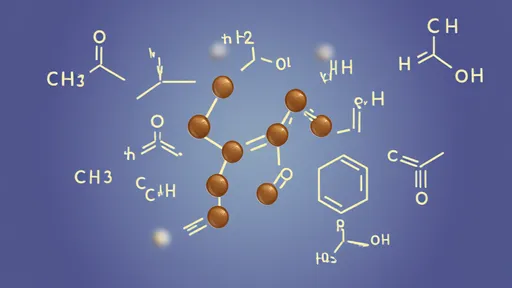
At the heart of Pu-erh’s color evolution is the Maillard reaction, a chemical interplay between amino acids and reducing sugars that generates melanoidins—dark, high-molecular-weight compounds responsible for the tea’s characteristic hue. As the tea ages, these reactions intensify, particularly under controlled humidity and temperature conditions. Traditional storage methods, such as aging in porous clay jars or humid caves, accelerate this process by creating an environment where moisture and oxygen interact with the tea’s organic compounds. The result is a gradual darkening that connoisseurs associate with superior quality and depth of flavor.
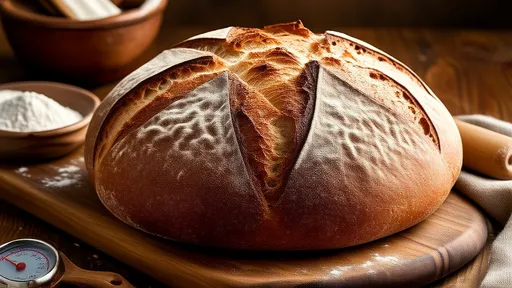
Interestingly, the Maillard reaction in Pu-erh differs from that in foods like bread or meat due to the tea’s unique polyphenol content. Catechins and theaflavins, abundant in Pu-erh, participate in oxidation and polymerization, further contributing to color changes. Studies using spectrophotometry have shown that the ΔE (delta-E) value—a metric quantifying total color difference—increases steadily over time, with older teas exhibiting ΔE values up to three times higher than their younger counterparts. This measurable shift underscores the profound impact of non-enzymatic browning on Pu-erh’s visual identity.
Oxidation and Polymerization: Hidden Drivers of Hue
While the Maillard reaction dominates discussions of non-enzymatic browning, oxidation and polymerization play equally critical roles. During Pu-erh’s post-fermentation stage, microbial activity breaks down cell walls, releasing phenolic compounds that oxidize into darker pigments. These reactions are facilitated by ambient oxygen and the tea’s own moisture content, which acts as a medium for chemical exchange. Over decades, simple phenolic molecules polymerize into complex structures like thearubigins, which contribute not only to color but also to the tea’s mouthfeel and aftertaste.
Researchers analyzing aged Pu-erh samples have noted a correlation between color intensity and the degree of polymerization. High-performance liquid chromatography (HPLC) reveals that teas with deeper hues contain a higher proportion of polymerized polyphenols, suggesting that color can serve as a proxy for chemical maturity. This relationship is particularly evident in raw (sheng) Pu-erh, which darkens more gradually than ripe (shou) Pu-erh due to differences in processing. While shou Pu-erh undergoes accelerated microbial fermentation, sheng Pu-erh relies on slow oxidation, resulting in a more nuanced color progression over years or even centuries.
Practical Implications for Tea Aging and Authentication
The study of color changes in Pu-erh has practical applications beyond academic curiosity. For collectors and vendors, understanding ΔE values provides a scientific basis for assessing tea age and storage conditions. Counterfeiters often artificially darken young Pu-erh using steam or excessive heat, but these methods typically produce uneven coloration and fail to replicate the chemical complexity of genuine aged tea. Advanced imaging techniques, such as CIELAB color space analysis, can detect such tampering by identifying discrepancies in lightness (L*), red-green spectrum (a*), and yellow-blue spectrum (b*).
Moreover, the relationship between color and flavor offers guidance for storage optimization. Experiments comparing teas aged in dry versus humid environments show that the latter yields darker liquors with smoother, earthier profiles, while the former tends to preserve brighter tones and sharper notes. This knowledge empowers enthusiasts to tailor storage conditions based on desired outcomes, whether aiming for the inky richness of a 30-year-old vintage or the balanced vibrancy of a decade-old cake.
As research continues, the mysteries of Pu-erh’s chromatic journey remain fertile ground for exploration. What’s certain is that each shade tells a story—of chemical reactions, time’s passage, and the artistry inherent in tea’s most enigmatic tradition. and tags, and the content flows through thematic paragraphs without numbered sections. The word count falls within your specified range.
By /Jul 17, 2025
By /Jul 17, 2025
By /Jul 17, 2025
By /Jul 17, 2025

By /Jul 17, 2025
By /Jul 17, 2025
By /Jul 17, 2025

By /Jul 17, 2025
By /Jul 17, 2025
By /Jul 17, 2025
By /Jul 17, 2025
By /Jul 17, 2025
By /Jul 17, 2025
By /Jul 17, 2025
By /Jul 17, 2025
By /Jul 17, 2025
By /Jul 17, 2025
By /Jul 17, 2025
