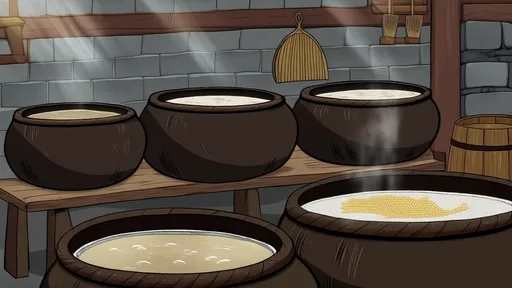
The fermentation process of soy sauce is a delicate dance between time, temperature, and microbial activity. At the heart of this transformation lies the breakdown of proteins in raw materials, a critical phase that determines the final product's flavor profile and quality. The duration of koji-making, typically ranging from 40 to 72 hours, creates distinct biochemical pathways that influence protein hydrolysis. Traditional brewers have long observed that extending the koji stage by just 12 hours can dramatically alter the balance between amino nitrogen and soluble peptides in the moromi mash.
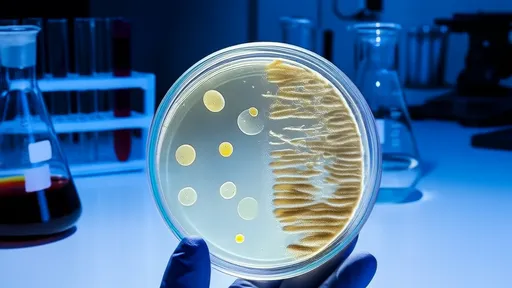
Microbial ecosystems in the koji room work tirelessly to prepare substrates for subsequent fermentation. Aspergillus oryzae secretes a cocktail of proteases that attack soy proteins at different cleavage sites. The longer these enzymes have to work during the koji phase, the more thorough the preliminary breakdown becomes. However, this isn't simply a matter of prolonged exposure - temperature fluctuations during the extended cycle create windows of opportunity for specific enzyme groups. Acid proteases dominate early in cooler periods, while alkaline proteases become active as temperatures rise, each contributing unique peptide fragments that will later develop into flavor compounds.
Modern analytical techniques have revealed surprising patterns in protein degradation timelines. Mass spectrometry studies show that certain hydrophobic protein fractions resist breakdown until the 60-hour mark in traditional koji cycles. These stubborn protein clusters, once finally cleaved, release precursor molecules essential for developing the rich umami character associated with premium soy sauce. The timing coincides with a natural die-off of early-stage microbes, making room for salt-tolerant strains that will continue the transformation during brine fermentation.
Water activity levels play an underappreciated role in protein hydrolysis during extended koji cycles. As the mold network permeates the substrate, it gradually reduces moisture availability through metabolic activity. This increasing dryness stresses the microbial community, triggering survival mechanisms that include enhanced protease secretion. The phenomenon creates a self-regulating system where protein breakdown accelerates precisely when the koji reaches peak enzyme production, typically between 48-54 hours in well-controlled environments.
Regional variations in koji duration reflect adaptation to local climates and microbial populations. Brewers in colder northern regions traditionally employ longer koji periods, sometimes exceeding 80 hours, to compensate for slower microbial metabolism. These extended cycles produce characteristically different amino acid profiles compared to southern-style rapid koji processes. The northern approach yields higher proportions of branched-chain amino acids that contribute to fuller body and more complex aftertaste development during aging.
Industrial production faces unique challenges in managing protein hydrolysis across different koji cycle lengths. Large-scale fermentation tanks don't allow for the precise temperature gradients found in traditional wooden trays, requiring careful manipulation of air flow and humidity to achieve similar proteolytic effects. Some manufacturers employ a hybrid approach - initiating protein breakdown with a shorter bulk koji phase, then completing it through controlled enzymatic supplementation during moromi. While efficient, this method often fails to replicate the nuanced flavor matrix created by uninterrupted natural decomposition.
The relationship between koji duration and protein breakdown isn't linear but rather follows a sigmoidal curve. Initial hours see minimal visible change as enzymes penetrate protein structures. Between 24-48 hours comes a period of rapid degradation, followed by a plateau where remaining resistant proteins slowly yield to persistent enzymatic attack. Master brewers learn to read physical cues - the changing texture of the koji mass, the evolution of aromatic compounds - to identify ideal transition points between these phases.
Seasonal adjustments in koji cycles account for variations in raw material composition. Winter soybeans with higher protein content often receive extended koji treatment to ensure complete breakdown, while summer crops might see reduced cycles to prevent over-hydrolysis. This practice highlights the sophisticated understanding traditional brewers developed regarding the interplay between source materials and fermentation timelines long before modern biochemistry could explain the underlying mechanisms.
Recent innovations in monitoring technology allow for real-time tracking of protein degradation markers. Near-infrared spectroscopy can now detect changes in peptide bond concentrations, giving brewers unprecedented control over the koji timeline. Some avant-garde producers are experimenting with dynamic cycle lengths, adjusting duration based on continuous analysis of protease activity rather than fixed timetables. This approach promises to optimize protein utilization while preserving the artisanal character of naturally fermented products.
The final stages of prolonged koji cycles see a fascinating shift in microbial priorities. As readily available proteins diminish, enzymes begin attacking more complex structures, including those within the mold hyphae themselves. This autolytic process releases intracellular compounds that contribute unique flavor nuances. The timing of when to halt this self-digestion becomes a critical decision point, balancing depth of flavor against potential bitterness from over-degradation.
Historical records reveal that traditional brewers developed intuitive methods for assessing protein breakdown completion. The "thread test" - observing how koji extract stretches between fingers - provided a rough gauge of peptide chain length. Modern analysis confirms this low-tech method had scientific merit, as viscosity directly correlates with intermediate protein degradation products. Such empirical knowledge allowed generations of brewers to achieve consistent results without understanding the molecular processes at work.
Climate change introduces new variables into the koji duration equation. Rising temperatures and humidity fluctuations challenge the predictable progression of protein hydrolysis. Some breweries report needing to shorten traditional cycles by 10-15% to prevent premature over-fermentation, while others install precision climate control to maintain historical timelines. The adaptation strategies chosen may lead to divergent evolution in regional soy sauce characteristics over coming decades.
The art of balancing koji duration against protein breakdown remains one of the most sophisticated aspects of traditional brewing. As scientific understanding catches up with centuries of accumulated wisdom, we gain deeper appreciation for how subtle variations in this initial fermentation stage ripple through the entire production process. Whether adhering to time-honored methods or embracing technological innovations, modern brewers continue to explore the rich possibilities contained within the simple soybean, unlocked through the patient alchemy of time and microbial transformation.
By /Jul 17, 2025
By /Jul 17, 2025
By /Jul 17, 2025
By /Jul 17, 2025
By /Jul 17, 2025
By /Jul 17, 2025
By /Jul 17, 2025
By /Jul 17, 2025
By /Jul 17, 2025
By /Jul 17, 2025
By /Jul 17, 2025
By /Jul 17, 2025
By /Jul 17, 2025
By /Jul 17, 2025
By /Jul 17, 2025
By /Jul 17, 2025
By /Jul 17, 2025
By /Jul 17, 2025
